
“Dragging is a thing of the past,” says Nepata CEO Fabian Franke. With its roll transport trolleys, his company has developed a solution for vinyl film and paper storage that is as simple as it is effective – available with or without a motor.
By Fabian Franke, CEO of NEPATA, November 2023
Not ideal: Transport using muscle power and a platform trolley
Be honest: do your staff carry rolls from A to B using sheer muscle power? Or do they balance the rolls on a platform trolley as they move through the warehouse? That is exactly what I have observed time and again during my visits to vinyl film distributors across Europe – and for a long time, I didn’t even question it myself.
It was only when we were developing our automated storage system for roll media that the question arose: how do the vinyl rolls, which the robot has retrieved from the vertical storage system, get from the handover point to the employee at the rewinding machine? And where are they temporarily stored until they are processed? The answer was a specially designed transport trolley – and with it the realisation that it was precisely this trolley that had been missing from the roll warehouse, even without a robot.
The idea: moving rolls more easily and safely around the warehouse
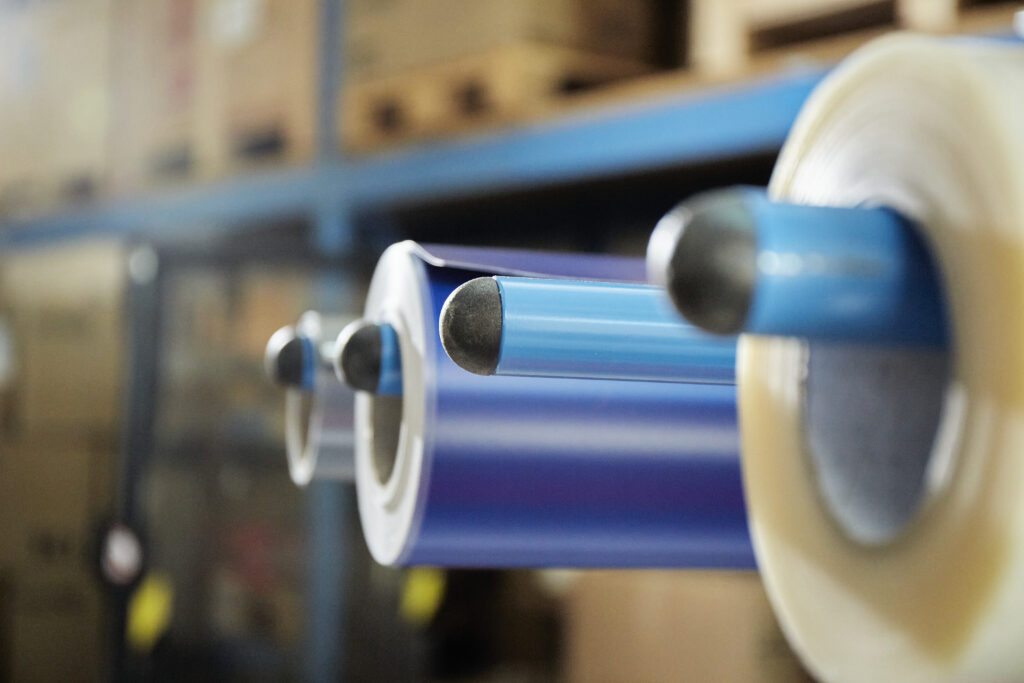
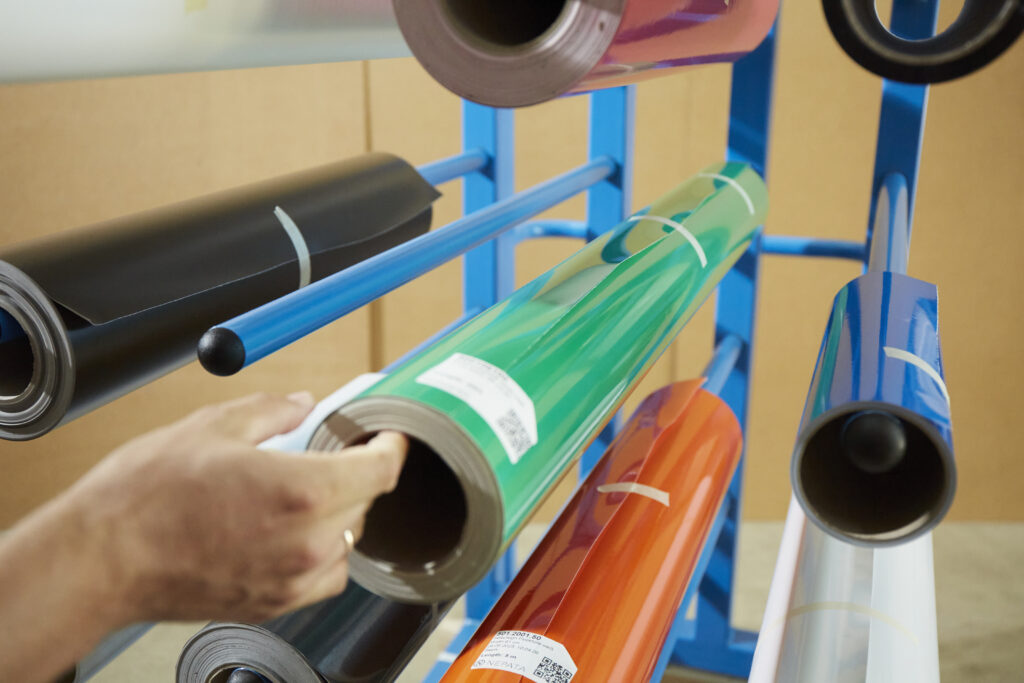
With the roll transport trolley, the rolls are suspended from mandrels by their cores – securely and in a way that protects the material. The trolley is available in two versions: as a robust standard model without a drive and as a high-performance model with a drive.
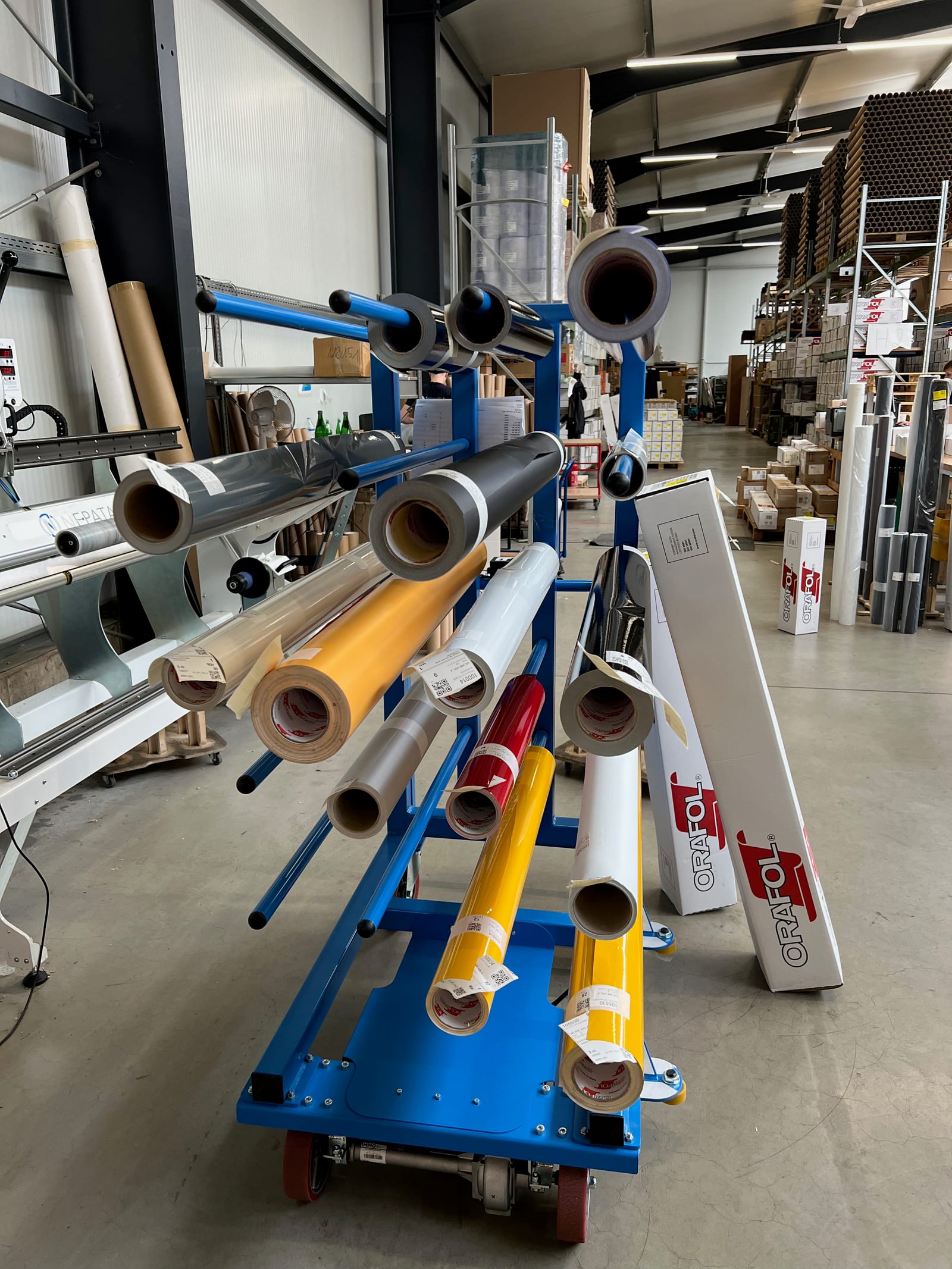
The motorised version in particular makes it easy to manoeuvre the trolley effortlessly through the warehouse and converting area – significantly reducing the physical strain on staff. As a single trolley can hold up to 20 rolls of vinyl film or other media, it also speeds up the picking process considerably.
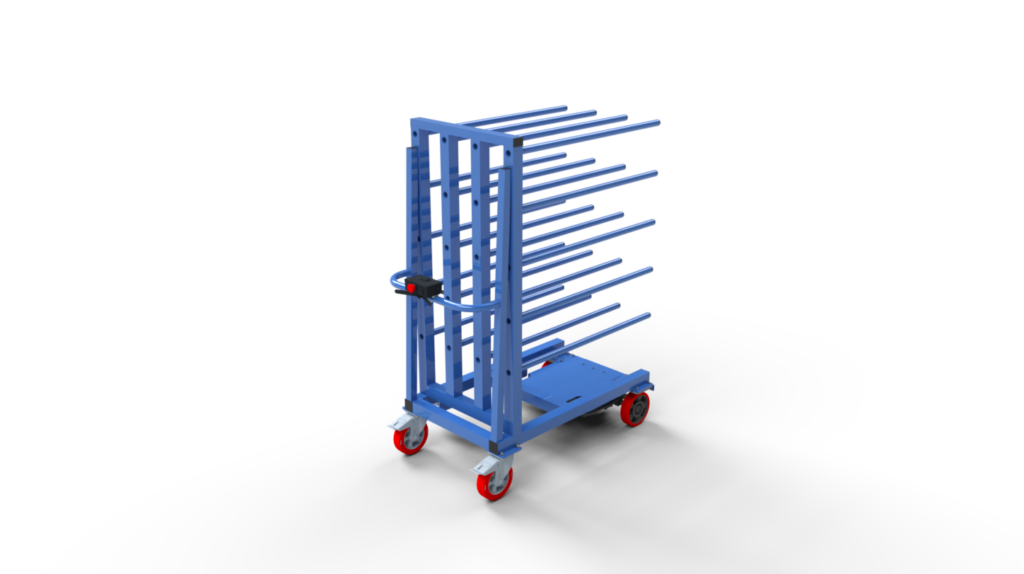

Key figures at a glance:
| Characteristic | Value |
|---|---|
| Roller width | up to 160 cm |
| Roller diameter | up to 16 cm |
| sleeve diameter | 2 or 3 inches |
| Reel weight | up to 25 kg |
| Capacity | up to 20 rolls |
| Variants | with or without a drive |
Three reasons to use roll transport trolleys
Whether you’re in the film trade, film manufacturing, signmaking, vehicle wrapping or the printing industry – these three advantages make roll transport trolleys the obvious choice:
1. Greater efficiency in the picking process
Moving several rolls at the same time means faster workflows and greater productivity. In warehousing and logistics, process optimisation is crucial for competitiveness, as fetching and delivering materials does not directly add value. The quicker these tasks are completed, the more converting jobs staff can process.
Furthermore, the design minimises damage to the rolls, as they are transported in a suspended position, thereby protecting the material. This reduces waste and avoids unnecessary costs. The roll transport trolleys are therefore a prime example of process optimisation in the warehouse: a significant gain in efficiency for a comparatively low investment.
2. Less strain on staff
Handling rolls requires strength and dexterity. This limits the pool of potential workers and is a risk factor for sick leave. Any measure that makes the work easier is therefore welcome – particularly at a time of skills shortages. In particular, the version with an integrated drive makes transporting even heavy rollers a breeze, even over ramps and inclines. This significantly reduces physical strain and, consequently, sickness-related absences. The risk of accidents is also reduced because the rollers are securely suspended and staff tire less quickly.
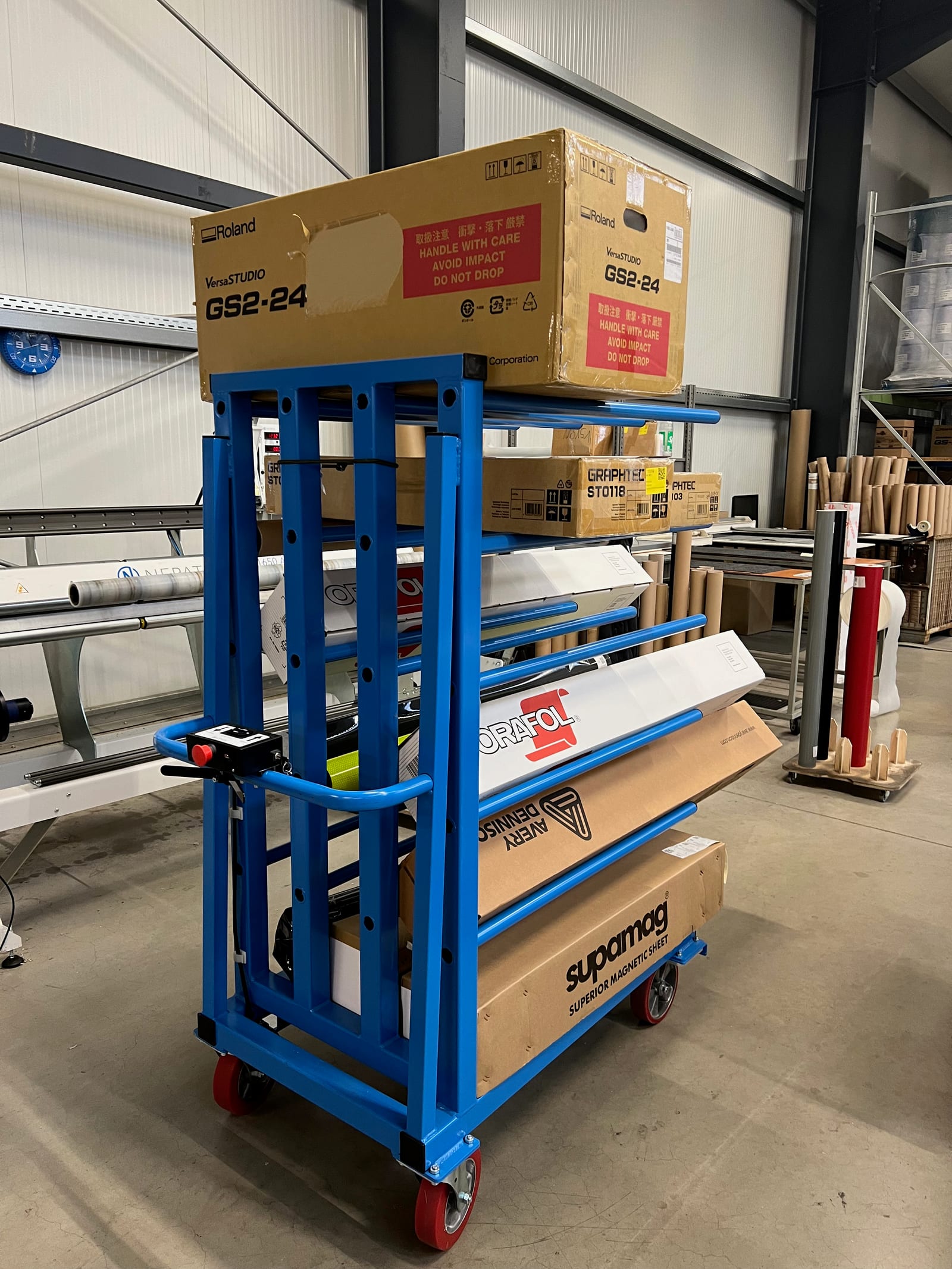
3. Store rolls in a way that is portable and space-saving
The non-motorised roll transport trolleys, in particular, are a valuable addition to any warehouse, as they are designed as a mobile storage solution. Companies with limited capacity or floor space can store rolls directly on the trolleys – where they are easily accessible and can be moved to another location as and when required. The motorised trolley is also suitable for use as a small temporary storage facility directly within the converting area or in the showroom. Furthermore, rolls or materials in cartons can be safely transported and stored on the trolley.
Conclusion
The roll transport trolleys solve the typical problems associated with the manual handling and transport of rolls. Their key benefit is that they make work easier: heavy rolls are wheeled rather than carried. The result is a smoother, more efficient workflow that boosts productivity whilst improving working conditions.
Would you like to boost productivity in your warehouse and reduce the strain on your staff? Request a quote for NEPATA’s roll transport trolleys.
The following video demonstrates further strategies for optimising your Film Logistics.