
In many industrialised countries, inflation is at its highest level for decades – and is expected to remain so for some time to come. NEPATA CEO Fabian Franke has examined what this means for the converting business and Film Logistics. His conclusion: now more than ever, it is worth investing in automation. By NEPATA CEO Fabian Franke, May 2022
Summary
High inflation is affecting vinyl film resellers in several ways. Below, I take a closer look at three aspects – costs in general, wages and storage space – and always come to the same conclusion: greater automation is the ideal solution. Experience shows that: With our machines and software, productivity during cutting can be increased by 40 per cent compared to simple set-ups. And an automated film warehouse requires only a third of the space needed by conventional shelving units. In this article, you’ll find out how you too can benefit from automation and why now is a good time to invest.

Persistent inflation and with interest rates set to rise – a good time to invest
8.1 per cent in the EU, 8.3 per cent in the US, 9.0 per cent in the UK – that was the rate of inflation in April 2022 compared with the same month the previous year (all figures from https://de.statista.com/). This has now been the case for months. Judging by what one reads, high inflation is likely to persist in the longer term. However, lending rates are still relatively low. Currently – in May 2022 – the European Central Bank’s key interest rate for the eurozone remains at 0 per cent, whilst the US Federal Reserve has recently raised its rate to 1 per cent . The major shift in interest rates is therefore still to come. This means that now is generally a good time to invest. The starting point is affordable loans. On top of that, high inflation is eroding the value of debt. Film trading and converting under cost pressure Of course, investment is not an end in itself. It should pay off as quickly as possible and drive the business forward. And this is precisely where inflation comes into play again. In Film Logistics, costs have recently risen enormously in some areas: freight costs, energy prices and the prices of vinyl films and papers themselves have been rising steadily since the outbreak of the pandemic and the invasion of Ukraine. These cost increases are putting pressure on companies to boost their productivity. For more than 15 years, I have been working with small and large-scale logistics systems for vinyl film converting all over the world. Experience shows that:
In most companies, there is still considerable scope for improving productivity and efficiency in the areas of Film Logistics and converting processes
On the one hand, there are numerous sources of error that erode the profitability of the business model – and which can be avoided: errors when cutting vinyl film to size, unnoticed deviations in length or width, rolls mixed up during dispatch, and media left to go off. On the other hand, we see what is sometimes cumbersome handling of delivery notes, long walking distances in the warehouse and other unproductive time-wasters for the workforce
How automation boosts the productivity of conversion jobs
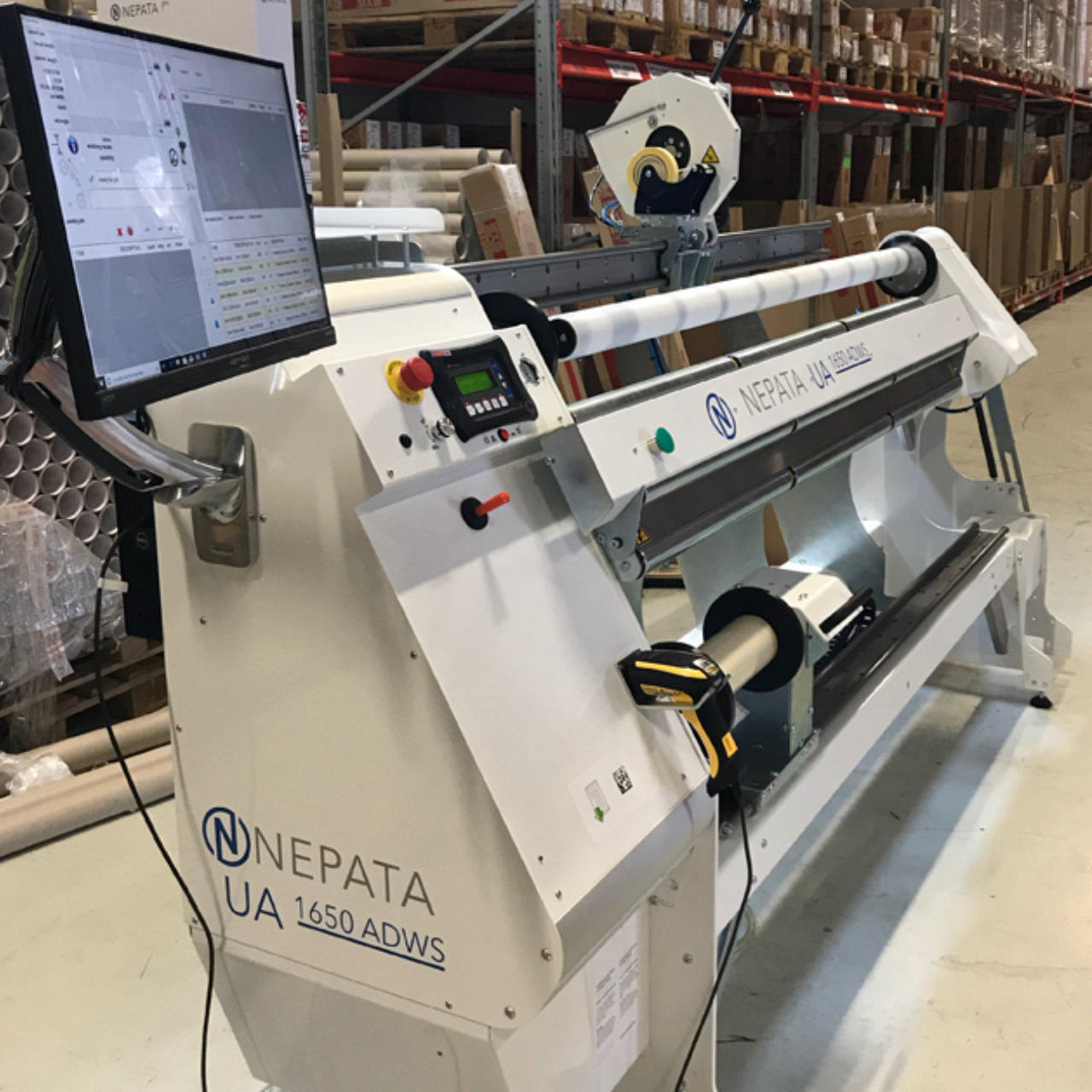
Automation is a solution to these problems. For over ten years, Nepata has been offering software-based rewinding and slitting solutions with the highest level of automation on the market. A converting centre, a rewinding machine or a slitting machine, combined with software support, can significantly improve profitability in film converting. The control software, with its ERP integration and label printing capabilities, ensures a smoother workflow and fewer errors.
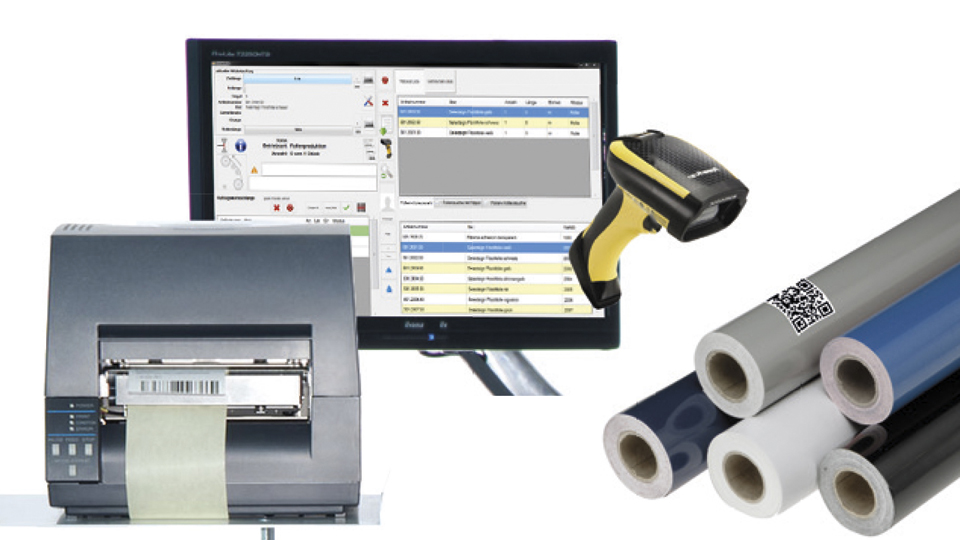
Feedback from our customers – including all the major players in the market – shows that:
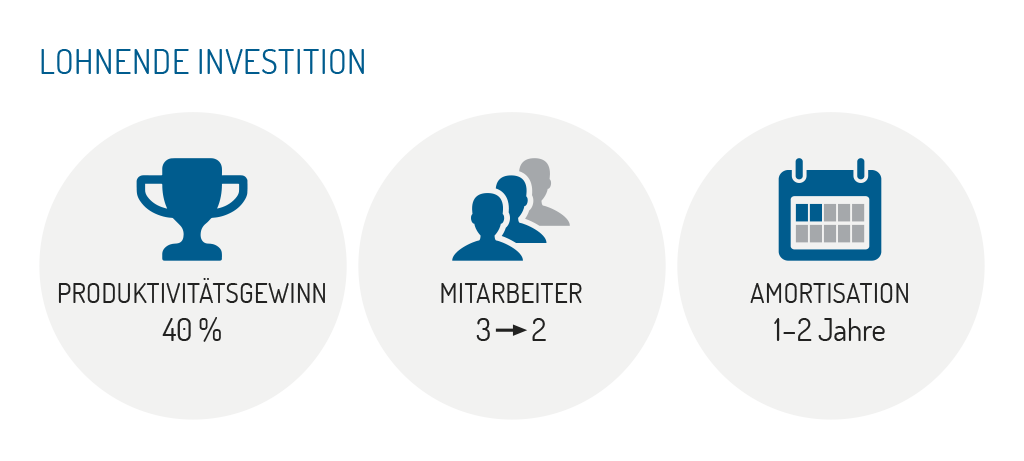
- Productivity in converting can be increased by more than 40 per cent compared with standard machines and equipment.
- The high precision saves our customers up to 5% of their total vinyl film purchase volume by minimising waste and errors.
- Thanks to savings in working time and materials, the return on investment is achieved within just 1 to 2 years.
Manual labour versus machines and robots
Inflation not only drives up business costs but also the cost of living. This means that, sooner or later, wages will rise. Many processes in the film trade are labour-intensive and time-consuming: fetching and returning rolls, cutting to size, packing … Here, too, automation helps businesses become more profitable and future-proof by reducing their reliance on manual labour. After all, the labour provided by staff is becoming increasingly expensive – and therefore more valuable, particularly in light of the skills shortage. One should not ‘waste’ their working time on tasks that do not directly add value. By using machines and robots, staff are freed up for other tasks or can get more work done in the same amount of time.
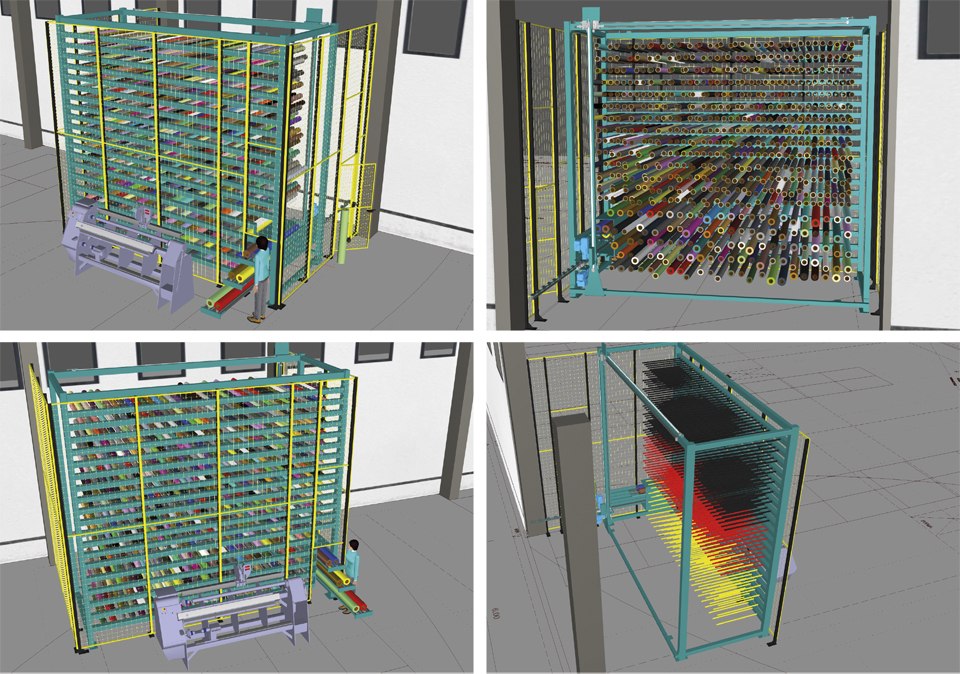
A concrete example: The process of fetching and returning vinyl rolls to and from the machine can now be fully automated. The rolls are placed in a storage system equipped with a vertical robot. The robot retrieves the rolls that are next in the order queue as specified in the software. Staff can concentrate on carrying out the jobs at the machine. At any given moment, the robot has a complete overview of everything in stock, which roll needs to be processed next – otherwise it will be overtaken by other stock – or which roll is particularly well-suited to the current job in terms of its length. These are all tasks that employees naturally find difficult, particularly when under time pressure, and where there is significant potential for optimisation. Another aspect is that many tasks in the field of converting are physically demanding or tedious, leading to high staff turnover. Recruiting and training new staff, in turn, costs time and money. A reliable, solidly built machine, however, just keeps on running and running and running. We expect our rewinders to have a service life of well over ten years. My conclusion:
Manual labour is becoming increasingly expensive in the face of inflation and increasingly valuable due to the shortage of skilled workers. Machines and robots, on the other hand, actually become more cost-effective the longer they are in use.
Expensive storage space – saving space with automated storage systems
I’ve heard that many construction projects are now being halted or postponed due to soaring prices and shortages of raw materials. But what can you do when your warehouse is bursting at the seams? Instead of an expensive extension or new building, it makes sense to invest in an automated storage system. This makes much better use of the available space, is cheaper than a new build and, on top of that – as mentioned above – also boosts staff productivity. For example, our automated film warehouse with vertical robots for 1,800 rolls requires just 60 square metres of floor space. We have calculated the figures for various configurations with capacities ranging from 400 to 1,800 rolls:
- The space required for the robotic warehouse is only 30 per cent to 60 per cent of that required for storage on shelving units.
- The potential savings in terms of floor space, labour costs and reduced overstocking, excess stock, picking errors etc. amount to a high five-figure to six-figure sum in euros per year.
- The ROI is achieved after five to six years – not taking inflation into account.
Conclusion: Automation in Film Logistics – if not now, then when? Sometimes it takes a wake-up call to move on from solutions of the past. Record-high inflation is just such a signal. Highly automated machinery, software support, automated warehousing systems: NEPATA solutions can form part of a strategy to drive greater innovation, productivity, digitalisation and Industry 4.0 within your organisation. After all, the time has never been more favourable for automation – and the return on investment more tangible. You can see further strategies for optimising your Film Logistics in this video >>> https://www.youtube.com/watch?v=haY0OTJrPsw