
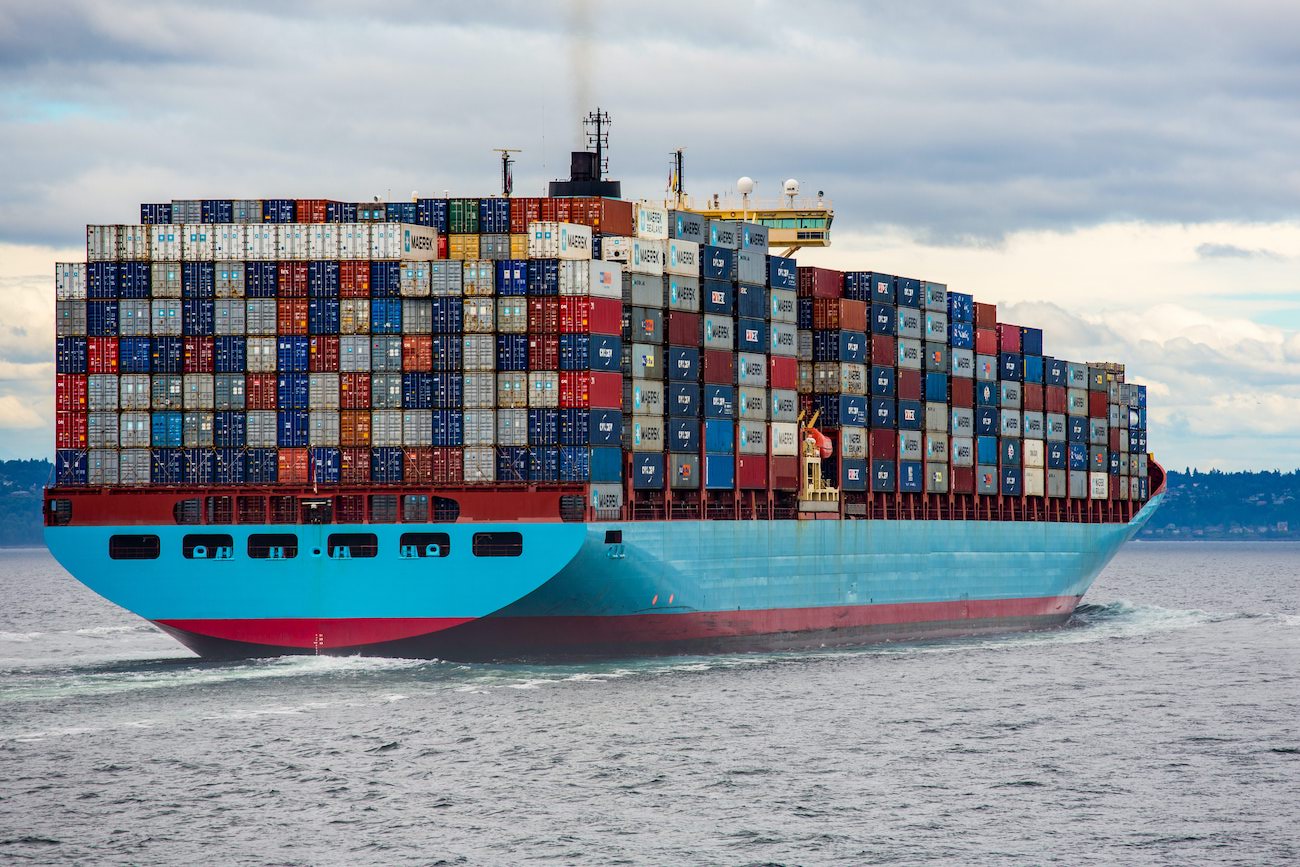
Shipping and freight costs have recently quadrupled in some cases – international trade in vinyl film is at risk of becoming unprofitable. NEPATA CEO Fabian Franke points to a solution: purchasing jumbo rolls.
An article by NEPATA CEO Fabian Franke, March 2022
Key points at a glance
Many vinyl films and similar products are manufactured in Asia, but are mainly sold in Europe, the USA or Oceania. Vinyl film resellers can save up to 70 per cent on sea freight costs by sourcing so-called ‘jumbo rolls’ from manufacturers and only converting these into standard rolls of 25, 50 or 100 metres once they reach the destination country. In this article, I outline this strategy and demonstrate how it can be implemented using NEPATA solutions with a manageable investment – compared to an industrial slitter/rewinder.
Vinyl films for signmaking and garment decoration: a global business
Supply chains remain disrupted as a result of the Covid pandemic. Energy prices have been rising for months, most recently exacerbated by the sanctions against Russia. At the same time, demand for products and raw materials is growing as the economy picks up again in many places. In short: international freight capacity is scarce and expensive. Since last year, shipping and freight costs have, in some cases, quadrupled.
This is also affecting the international trade in vinyl films. Flock films, flex films, self-adhesive films, protective films and similar materials are often produced in Asia, whilst the customers are predominantly based in Europe or the US. Added to this are trade links between manufacturers and distributors from the US and Europe, as well as from remote markets such as Australia and New Zealand.
How wholesalers and distributors can optimise freight costs
Vinyl rolls therefore sometimes travel long distances – and freight costs are driving up product prices significantly. Business models are at risk of becoming unprofitable. Vinyl film resellers, particularly wholesalers and distributors, must therefore reduce their freight costs. One promising strategy is to source jumbo rolls directly from the manufacturer. These are over 1,000 metres in length and are only subject to rewinding into standard rolls of 25, 50 or 100 metres once they arrive in the destination country. Above all, this reduces volumetric weight in sea freight – a decisive factor in freight costs.
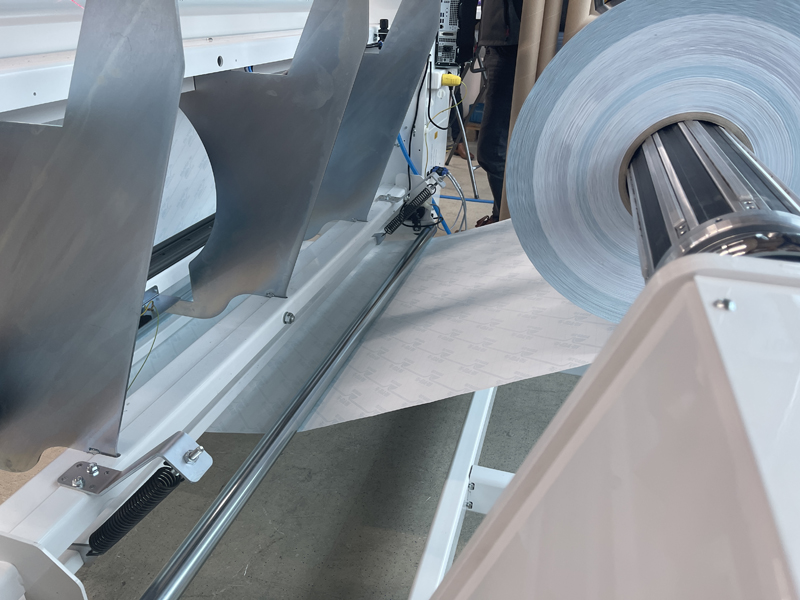
A calculation example: A jumbo roll containing 1,500 running metres of vinyl film has a diameter of around 70 cm and is 1.22 m high – this corresponds to a volume of only around 0.6 cubic metres. If the same goods are shipped as 50-metre rolls, this amounts to 30 rolls in individual cartons, requiring 1.5 Euro pallets or almost 1.8 cubic metres of space – three times that of the jumbo roll. Our calculations show that, depending on the material, jumbo rolls can save between 50 and 70 per cent of sea freight costs.
Interim conclusion: Using jumbo reels can save between 50 and 70 per cent of the costs involved in sea freight.
Converting jumbo rolls for resale
However, simply taking delivery of the large rolls is not enough: the vinyl film reseller must still rewind the jumbo rolls into standard-sized short rolls and perform length trimming. Due to their design, NEPATA rewinders can unwrap rolls with a maximum diameter of 40 cm. The ‘jumbo strategy’ therefore initially requires an additional investment – though this is surprisingly modest and pays for itself quickly.
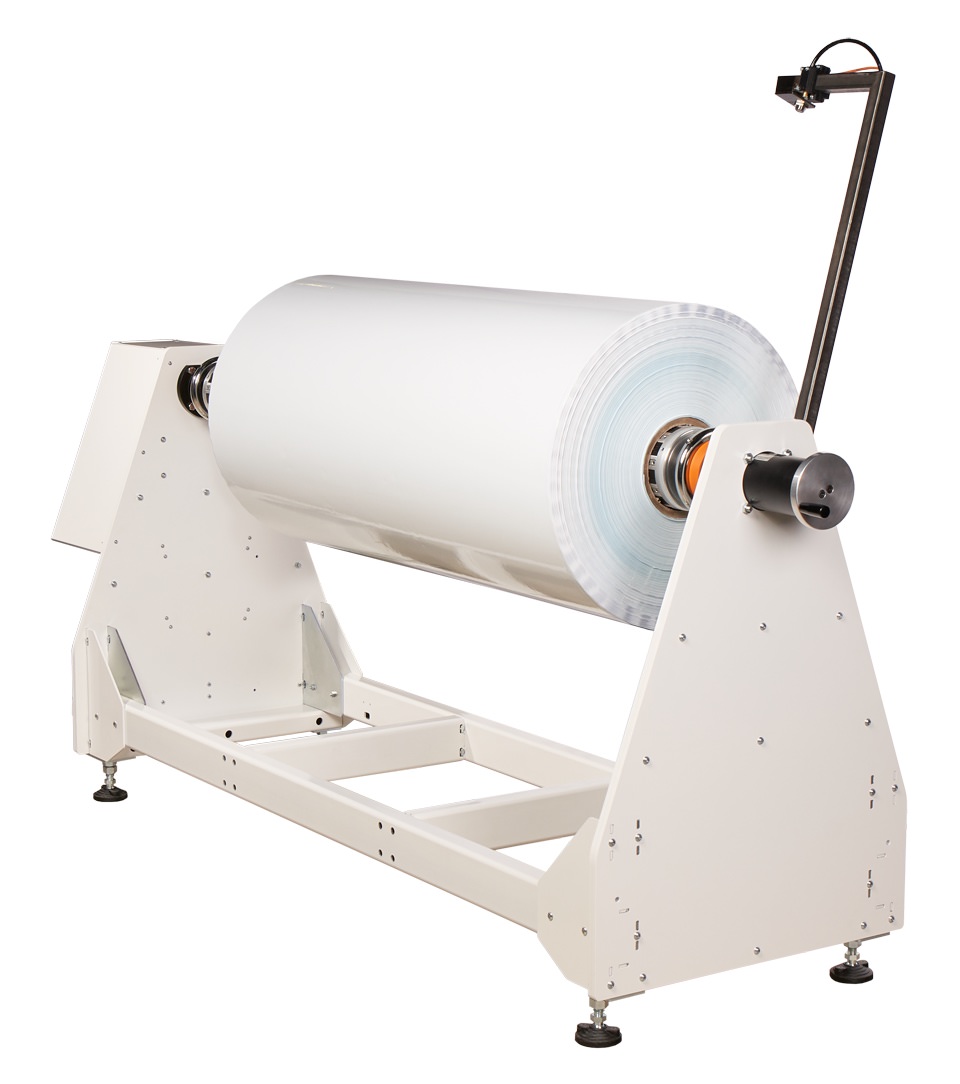
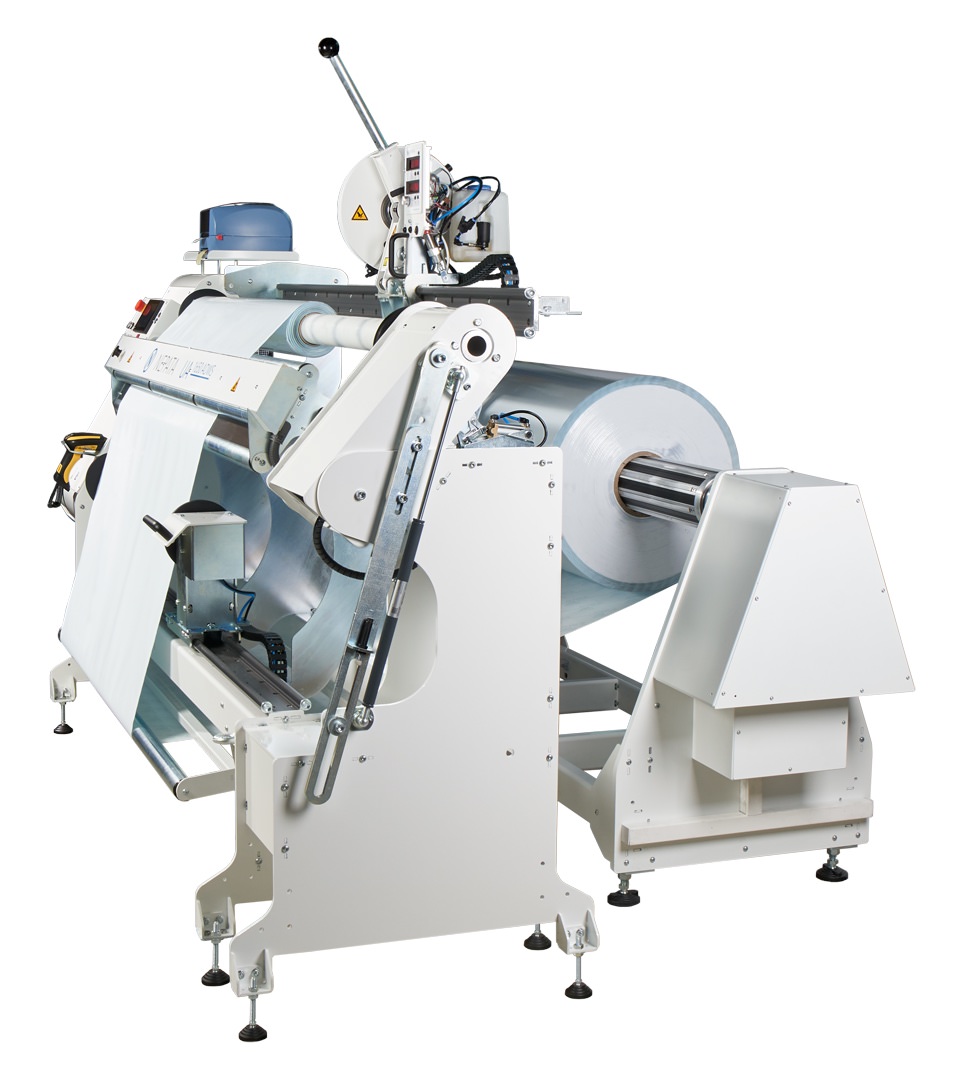
To this end, we have developed the Jumbo Companion: an optional unwinding unit that operates directly on a conversion centre or a rewinding machine. With the Jumbo unwinder, rolls up to 100 cm in diameter and weighing up to 500 kg can be unwound and, as usual, precisely rewound and cross-cut using the NEPATA machine and software.
A conversion solution requiring a moderate investment
In principle, industrial converting solutions would also be conceivable, such as large slitter-rewinders of the sort commonly found in the packaging or paper industries. However, our combination of a rewinding machine and an optional jumbo unwinder offers two key advantages:
- Flexible use of machine capacity
With the Jumbo Companion, vinyl film resellers can utilise part of the machine’s capacity for series production and convert jumbo rolls into standard rolls of 25, 50 or 100 metres. In between jobs, the machine is ready for use as a flexible, precise and ergonomic rewinder and slitter for individual rolls and special orders, without the need for any changeover, thanks to its internal unwinder. The JC models process a wide range of vinyl films, papers and non-wovens. - Manageable investment costs
The aim of the jumbo strategy is to achieve cost advantages and remain competitive. An oversized machine would make little sense for this purpose: industrial converting machines and slitters cost hundreds of thousands to over a million euros. Our solution, the Jumbo Companion, also converts jumbo reels into short rolls – at an investment cost in the five-figure euro range. This is an amount that pays for itself quickly, particularly as freight rates continue to rise.
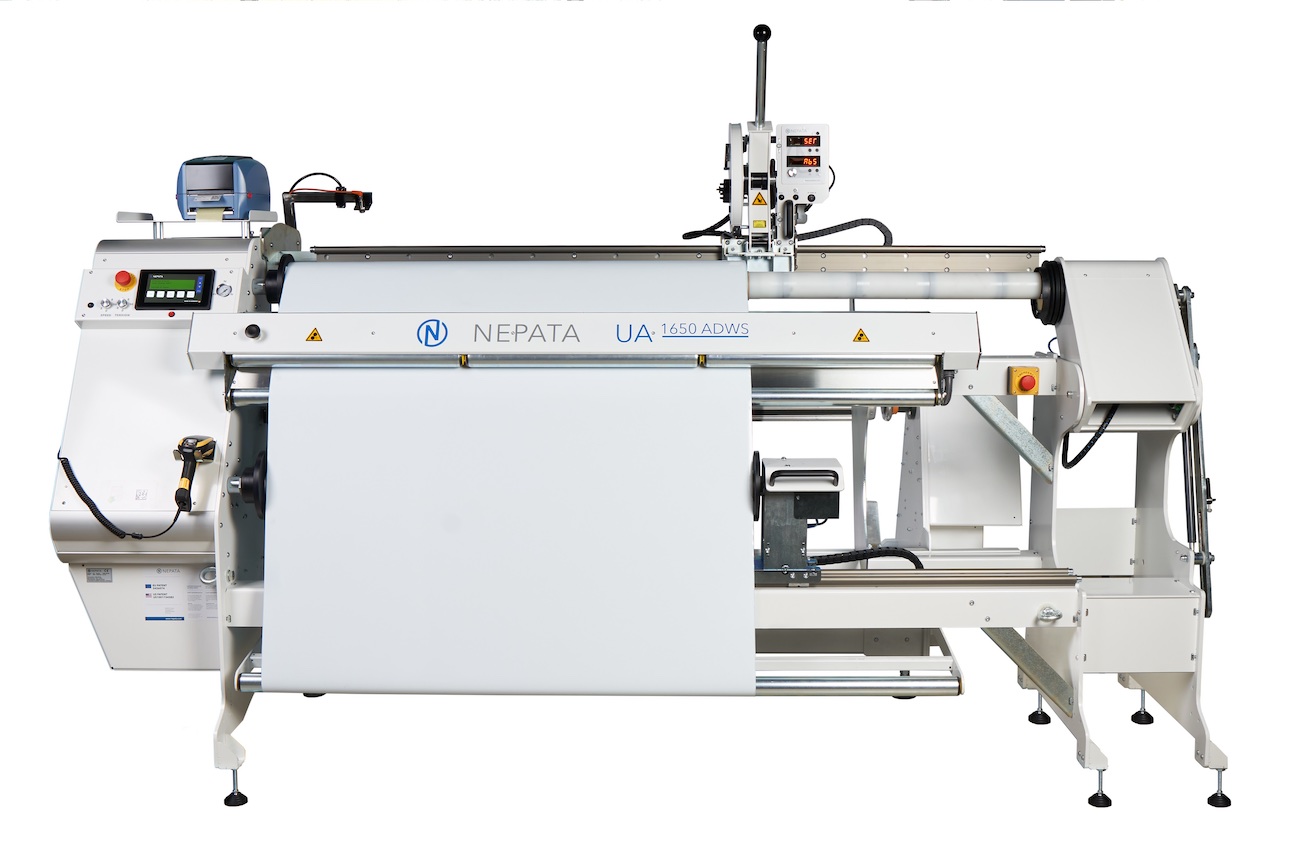
A NEPATA rewinding machine with a jumbo unwinder ultimately achieves the same results as an industrial converter that is 15 times as expensive.
Conclusion: Remaining profitable with the ‘Jumbo’ strategy
With a conversion solution from Nepata, complemented by a jumbo unwinder, vinyl film resellers can tackle the challenges posed by the current freight cost crisis – and gain a decisive competitive edge that will enable them to continue offering film products profitably.
The Jumbo Companion in the video
You can find all the technical specifications on the Jumbo Companion JC1650 product page.