
The world’s most advanced automated warehouse for roll media has commenced operations. For converters, vinyl film distributors and digital printers, this means greater efficiency, and colour sample cardsfor vinyl films are hugely important for sales in the advertising technology sector. And yet they are gradually disappearing because film manufacturers find them too costly to produce. This is where NEPATA can step in: with a unique production process for manufacturing colour strips at low unit costs. And with a comprehensive, hassle-free service right through to the finished colour chart.
By Fabian Franke, CEO of NEPATA
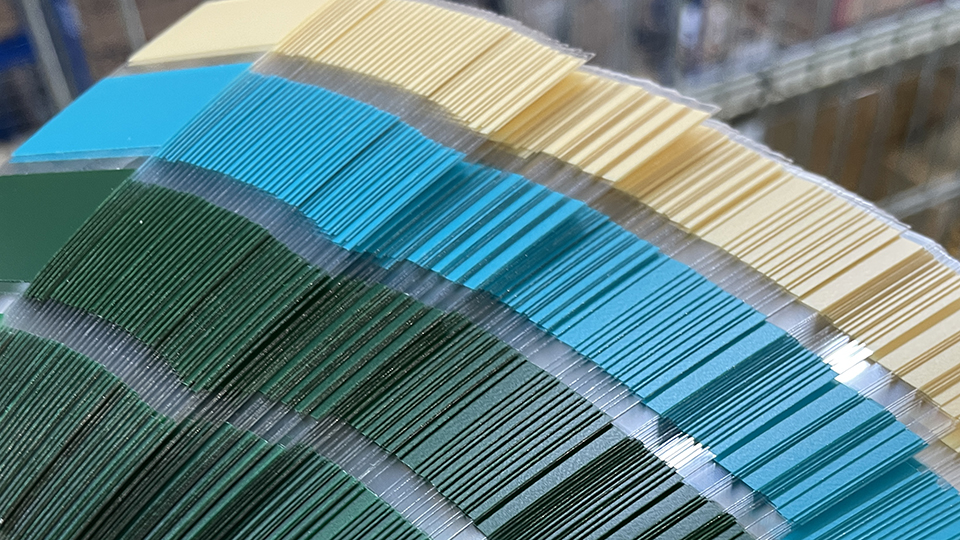
Did you know that here at NEPATA we don’t just build machines for rewinding, length trimming and slitting? As a service provider, we also produce custom colour sample charts and colour strips – automatically and cost-effectively. In this article, I’ll explain why it can be worthwhile for you, as a film manufacturer or wholesaler, to entrust the production of colour strips and colour charts to us.
Colour charts for vinyl films – an essential part of the vinyl film trade and signmaking
Colour sample charts are hugely important for film manufacturers and retailers in the signage and advertising industry when it comes to sales: they are the only way for customers to make an informed choice from the vast range of decorative films, car wrapping films, flock films, flex films and so on. A signmaking technician is tasked with applying graphics to a tradesperson’s new delivery van. Now he has to decide: which Oracal colour best matches the company logo? Or would a plotter film from Aslan, Mactac or Arlon be a better fit? A school leavers’ class wants to order T-shirts with neon green lettering. The creative team is now in the textile finisher’s showroom. Which looks better? The flock film or the flex film? From vinyl film manufacturer Hexis or from Politape?
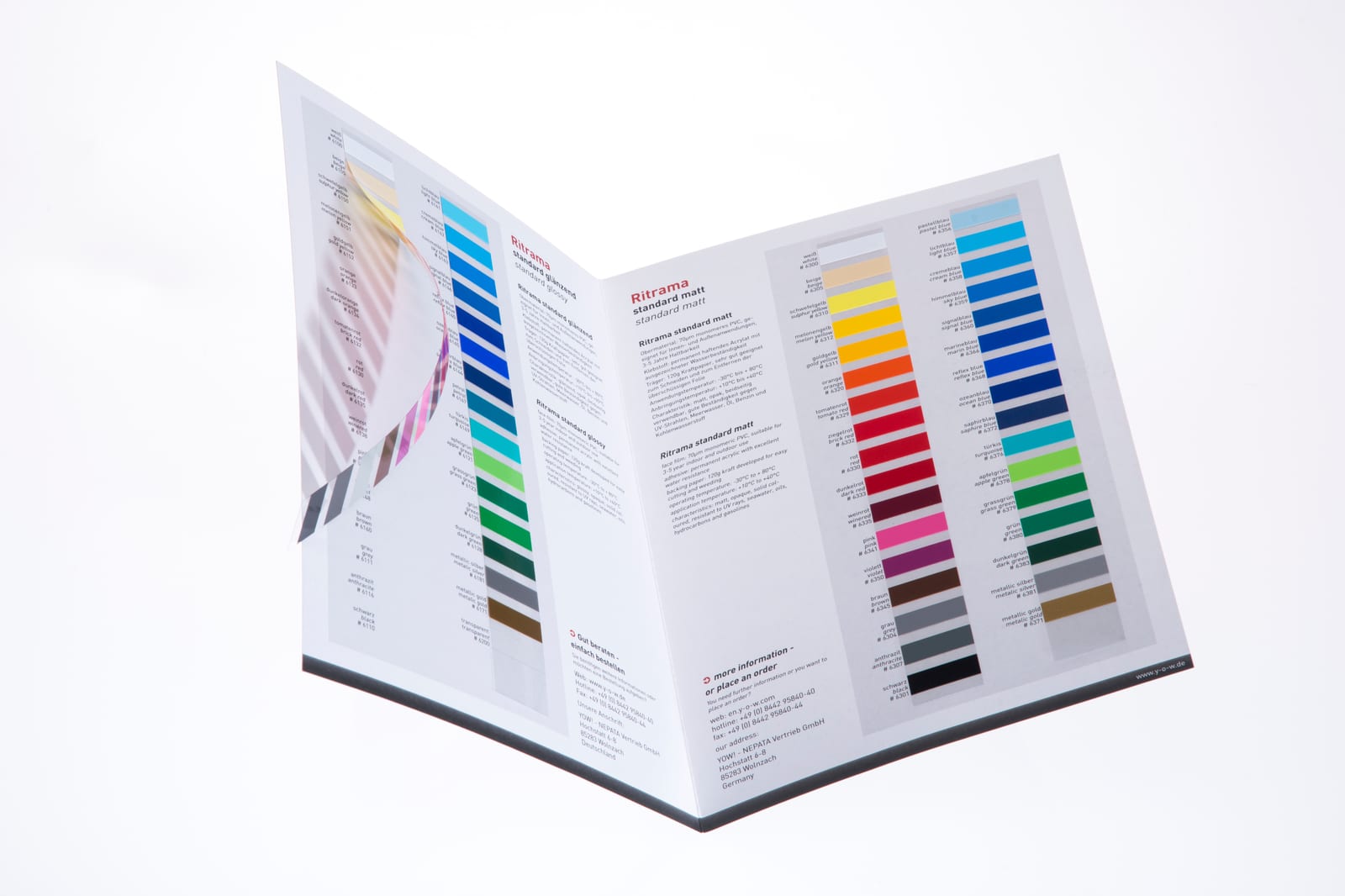
Ultimately, end customers in particular will only order what they can see and touch – after all, they know nothing else. However, it is impossible for a signmaker to keep all materials in stock. It is even more difficult for online shops: colour representation on screens is anything but reliable. How are you supposed to choose the self-adhesive film for your kitchen makeover project?
This makes colour charts all the more important. And they really ought to be available in large quantities so that they can be distributed as widely as possible to customers. Because one thing is certain:
Colour charts increase the likelihood that customers will choose exactly the vinyl film they have seen for their professional or DIY project. They are the key tool in film sales.
However, producing these sample cards is labour-intensive, time-consuming and expensive for manufacturers. In Europe in particular, the situation is as follows: there are retailers in Italy, the Czech Republic, Poland or Spain, and each one needs 300 colour charts a year in their own language. Above all, however, it is the production of the small sample strips that leads to frustration and high costs. This results in the dilemma of not being able to supply all customers with colour charts
because the costs would be too high. Consequently, many manufacturers are very restrictive when it comes to the number of colour swatch cards they provide – much to the chagrin of distributors and customers alike. Furthermore, for marketing campaigns – such as wide-reaching mailshots or inserts in trade journals – the costs and lead times are often simply too high.
High quality, high speed – thanks to industrial production
This is where we come in: NEPATA has developed a unique production process for manufacturing colour strips for self-adhesive media. Our industrial production facilities enable us to cut the colour strips quickly, in large quantities and with precision. At the same time, automation ensures a high degree of flexibility – and, above all, low unit costs. We developed this production process and the machinery required for it 10 years ago. It is, therefore, a tried-and-tested system. Incidentally, production – and thus the creation of value – takes place directly at our German headquarters.
To make this clear at this point: we are not talking here about colour fans, but exclusively about colour charts in which sample strips are glued into fold-out cards.
So how does the production of these colour strips work? Let’s take a specific example from one of our customers. Every two years, they commission us to produce 5,000 colour charts for their vinyl films. We receive the material in the standard 50-metre lengths typical for PVC vinyl films. We perform slitting on these, producing narrow rolls with a width of exactly 2 cm. Of course, a width of 3 cm, for example, would also be possible.
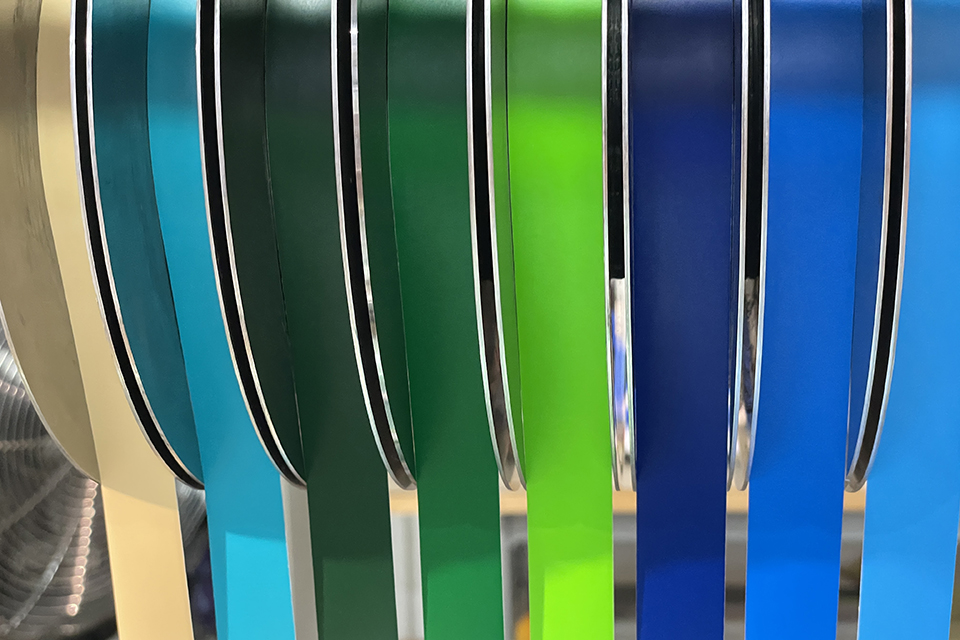
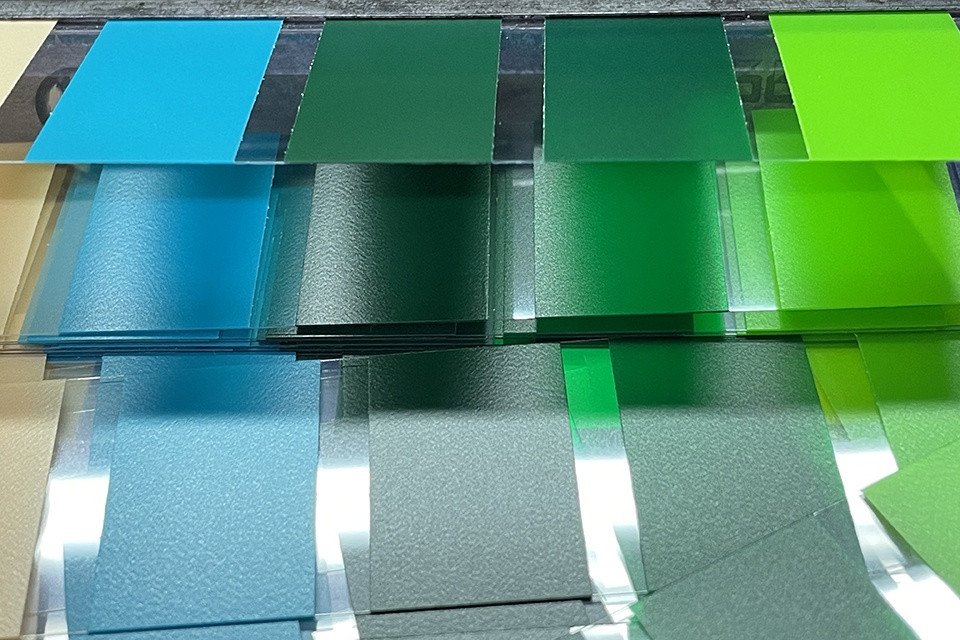
In the next step, our specialised machine – operating fully automatically – peels the silicone paper off the tapes, and the plotter vinyl film is bonded to the transparent PE vinyl film using its own adhesive. This process takes place simultaneously for all colours applied to a sample strip.
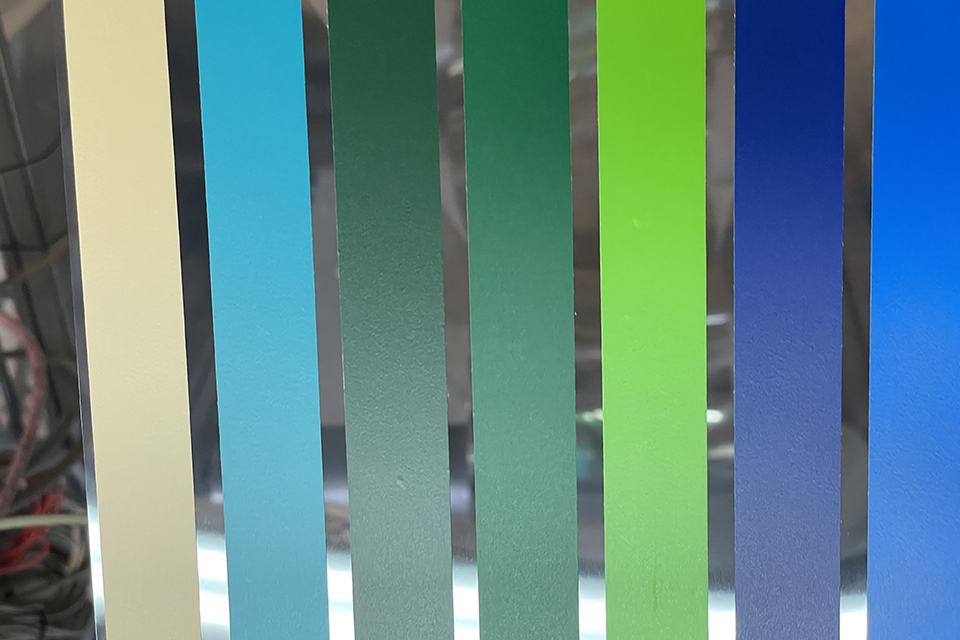
Finally, the material is automatically cut crosswise to the correct strip size.
Lower unit costs with increased production
As our process is highly automated, production naturally becomes increasingly cost-effective for larger quantities. I’d say that from 500 strips of a single type, it’s worth considering. However, as we are not a small-scale manufacturer, things really start to look promising when the order is in the region of several thousand pieces.
This is all the more true when you factor in the raw material. For the 5,000 colour sample cards in our example, we need four of these 50-metre-long, 2-cm-wide strips for each colour. This means the master roll is 8 cm short in width. As this roll is no longer saleable to the manufacturer anyway, they can easily use the material to produce even larger quantities of colour sample strips or colour charts.
When we receive whole rolls from film manufacturers, we have enough material for tens of thousands of sample strips. This means that all dealers worldwide could be supplied with colour charts using material they have already invested in anyway.
Now, one might be tempted to rewind the strips around short rolls rather than taking them from an original 50-metre roll, and to use more than just four strips to do so. Well – in that case, the productivity benefits of our automated production process do not come into play to the same extent. You could say: the longer, the better; in other words, the standard 50-metre rolls for PVC vinyl films and 25-metre rolls for textile transfer vinyl films are simply more effective than if we were to process shorter lengths.
Speaking of textile films: as described above, our process works for all self-adhesive films. In the case of non-self-adhesive media, such as flex film or flock film, the customer first applies a self-adhesive backing to their vinyl films. As part of our full service – more on this below – we can also take care of this for you, i.e. removing the release liner and applying a self-adhesive coating.
A comprehensive service right through to the finished colour chart
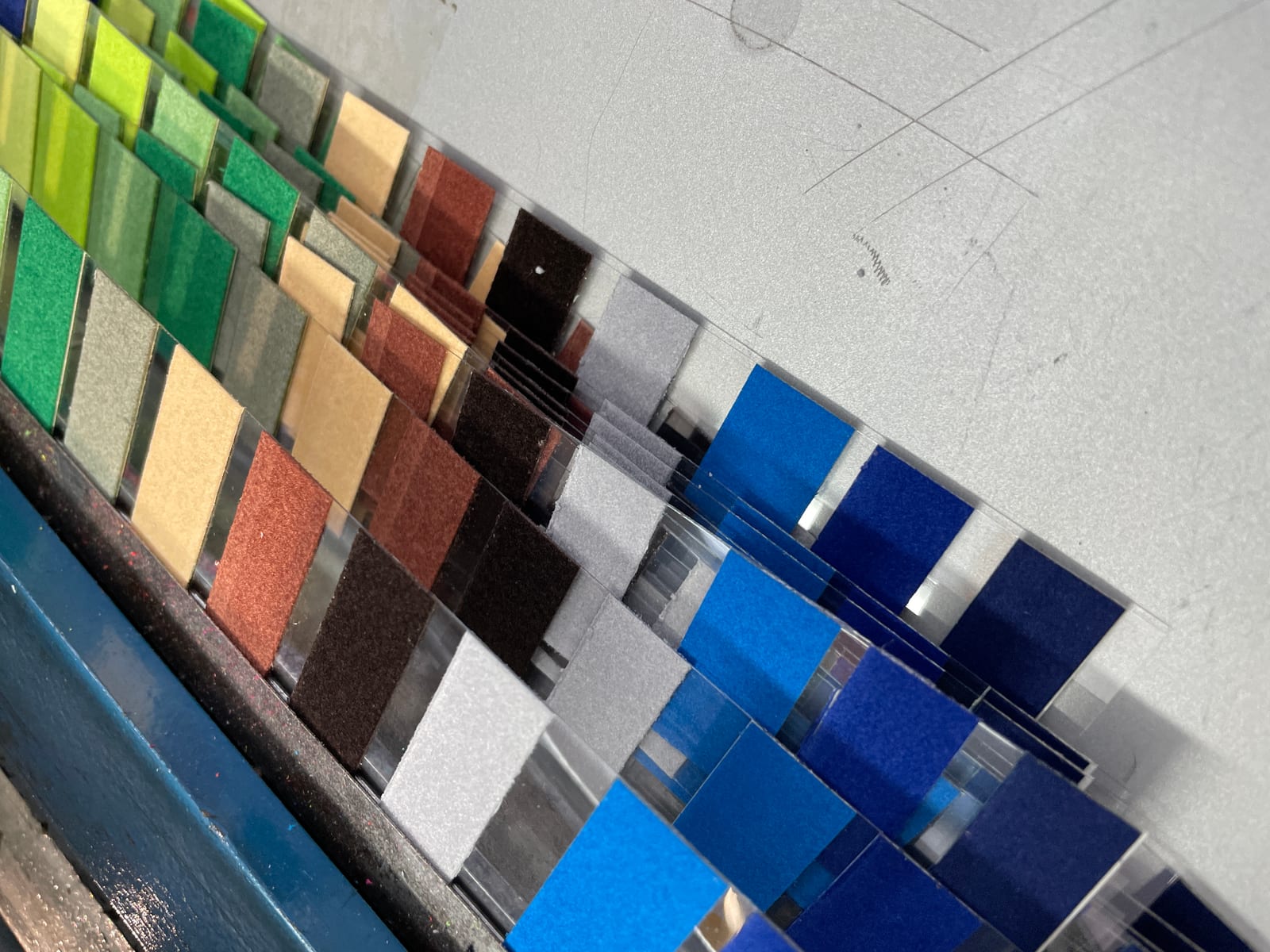
As a flexible service provider, we can either simply handle the particularly cost-effective production of the colour strips. Alternatively, film manufacturers can make use of our all-round, hassle-free service and outsource the entire process to us. In that case, we take care of every step: printing the cards, cutting the colour strips to size, and – for flex and flock films – applying the self-adhesive coating as well; and finally, the complete assembly process, i.e. gluing the colour strips into the cards and packaging them. This means our customers do not have to organise these many steps in-house or coordinate multiple service providers, possibly in different countries. In short: the manufacturer or distributor basically just needs to take their vinyl films off the shelf and send them to us – we take care of everything else.
Interface between film manufacturers and film distributors
And it goes one step further: we can also act as an interface between manufacturers and retailers. To do this, the manufacturer might, for example, have us produce 5,000 strip sets – some of which remain in our stock. If a retailer needs new colour charts, they give us a call, and we print the 300 charts in their language and with their logo, and assemble the strips.
The solution for film manufacturers: completely outsourcing the tiresome issue of colour charts – and doing retailers a favour.
The service works even better when a manufacturer decides to provide us with the raw material – that is, one roll of each film type or colour. We can then produce the strips for the respective retailer exactly as they wish: a specific selection of colours, in a customised order, etc. Our process is so flexible that it is even possible to change the printed material and colour samples within a single batch.
Another model I can envisage involves wholesalers who stock vinyl films from various manufacturers in their portfolio. They can create their own colour charts (in their own layout) – and have us produce colour strips featuring the range that is relevant to them. This is, of course, far more attractive than, at best, having a stamp field on a manufacturer’s chart and, on top of that, having to send customers two, three or four charts from different manufacturers and ranges.
However, I do understand when vinyl film resellers tell me that it is too labour-intensive for them to cut pieces from 120 different types of vinyl film to produce the strips, just for a few hundred colour charts. On the one hand, because it’s a lot of work; on the other, because the dimensions of the remaining rolls then no longer meet customer requirements. That is why I am once again appealing to manufacturers of self-adhesive films to consider outsourcing the production of colour charts. Larger quantities are simply more cost-effective.
Conclusion: Colour sample cards – it really is possible
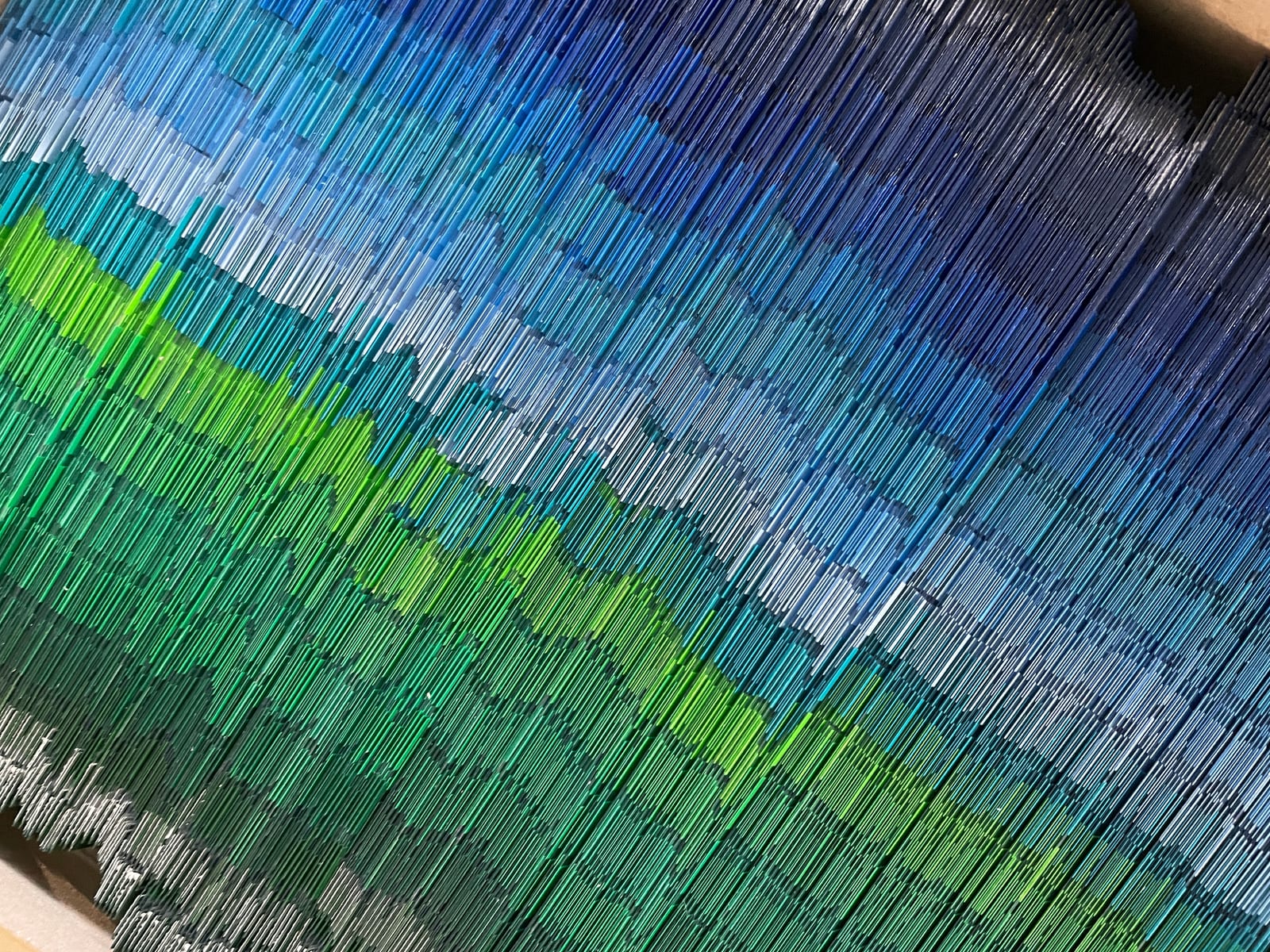
Thanks to our highly automated – and therefore cost-effective – production process, we enable film manufacturers to distribute colour charts on a large scale to distributors, retailers and customers, to include them with trade journals, or to distribute them to potential customers as part of large-scale mailing campaigns. Further advantages of industrial production include the high precision of the sample strips and extremely short lead times. And the optional full service – including handling of print files, mounting the strips and customisation for retailers – takes even more of the strain off your own resources. After all, you’ll hopefully need those resources elsewhere when, thanks to the colour charts, your vinyl films are in high demand.
You can see which materials are available and their specific benefits here: