
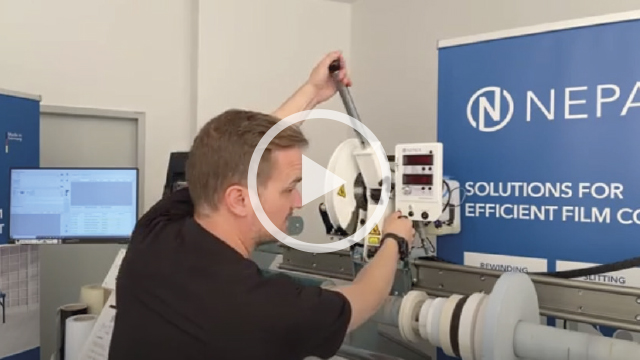
A clean cut edge is essential when slitting vinyl film from a roll. But how do you achieve this? Here are a few recommendations for day-to-day practice.
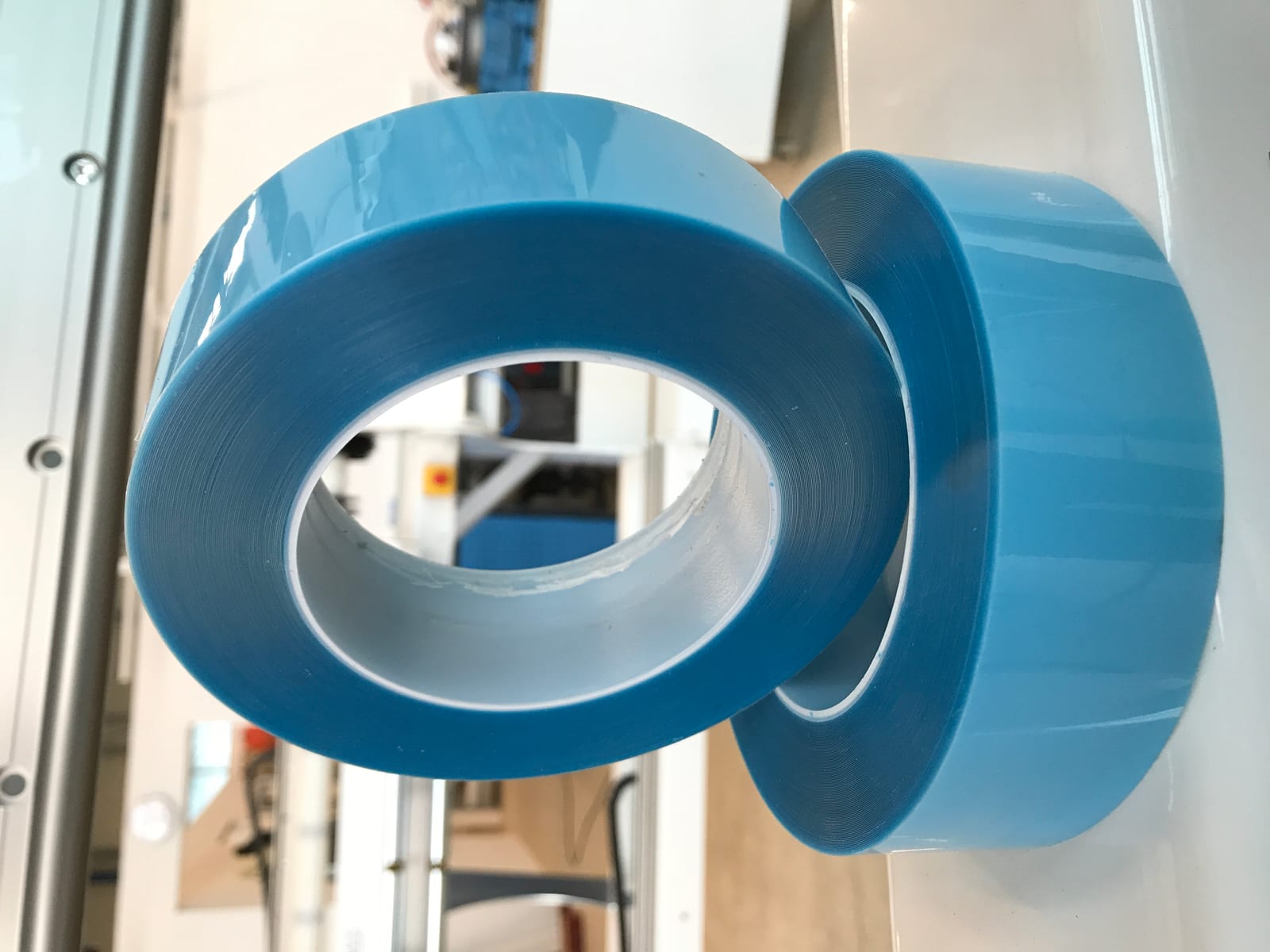
Slitting like a pro – it’s not that difficult. Once you’ve grasped a few basic principles. In this instalment of our cutting series, we take a closer look at seven parameters. These have a major influence on whether the cut edge frays, the roll gets squashed, or whether dust or adhesive residue builds up – or not.
The following sections cover these topics:
1. Rotational speed: Faster isn’t always better
2. Penetration speed into the material: Precision control rather than high pressure
3. Special case: stationary blade
4. Blade lubrication: Whenever possible
5. Blade temperature: If in doubt, take a break
6. Ambient temperature: Lubricate generously in hot conditions
7. Tension of the material: It’s better to perform rewind operations on it
1. Rotational speed: Faster isn’t always better
A higher rotational speed is not always the best choice. The faster the spool spins, the more frequently the blade passes over a section that has already been cut. This generates more friction, which in turn produces more heat and tends to result in more dust and fraying, as the blade repeatedly scrapes along the material that has already been cut. However, the slower the roll is rotated, the less torque the motor develops – until a point is eventually reached where the blade can no longer cut through, particularly when dealing with tough material.
Our recommendation: A good middle ground for NEPATA slitting machines is a setting of 50 to 70 per cent of the maximum speed.
2. Immersion speed into the medium: High control rather than high pressure
Of course, you do need to apply a certain amount of force. However, you mustn’t press the trimming unit down too hard under any circumstances. That would crush the material. Furthermore, if too much force is applied, the blade may even bend. This would cause fraying. On the other hand, if you’re too tentative and don’t have a firm grip on the cutting lever, you run the risk of the blade wobbling on contact with the roll, thereby damaging the material.
Our recommendation: Apply gentle pressure whilst maintaining tight control over the slitting lever. This requires a firm hand, not necessarily strong downward pressure. If you notice the process starting to stall, the rotational speed must be increased slightly to provide more torque. For many materials, a moderate, brisk speed is recommended (flock film, flex film, laminating film), whilst for others a slower speed is preferable (e.g. magnetic foils, reflective adhesive films). Testing and experience are required here.
3. Special case: upright blade
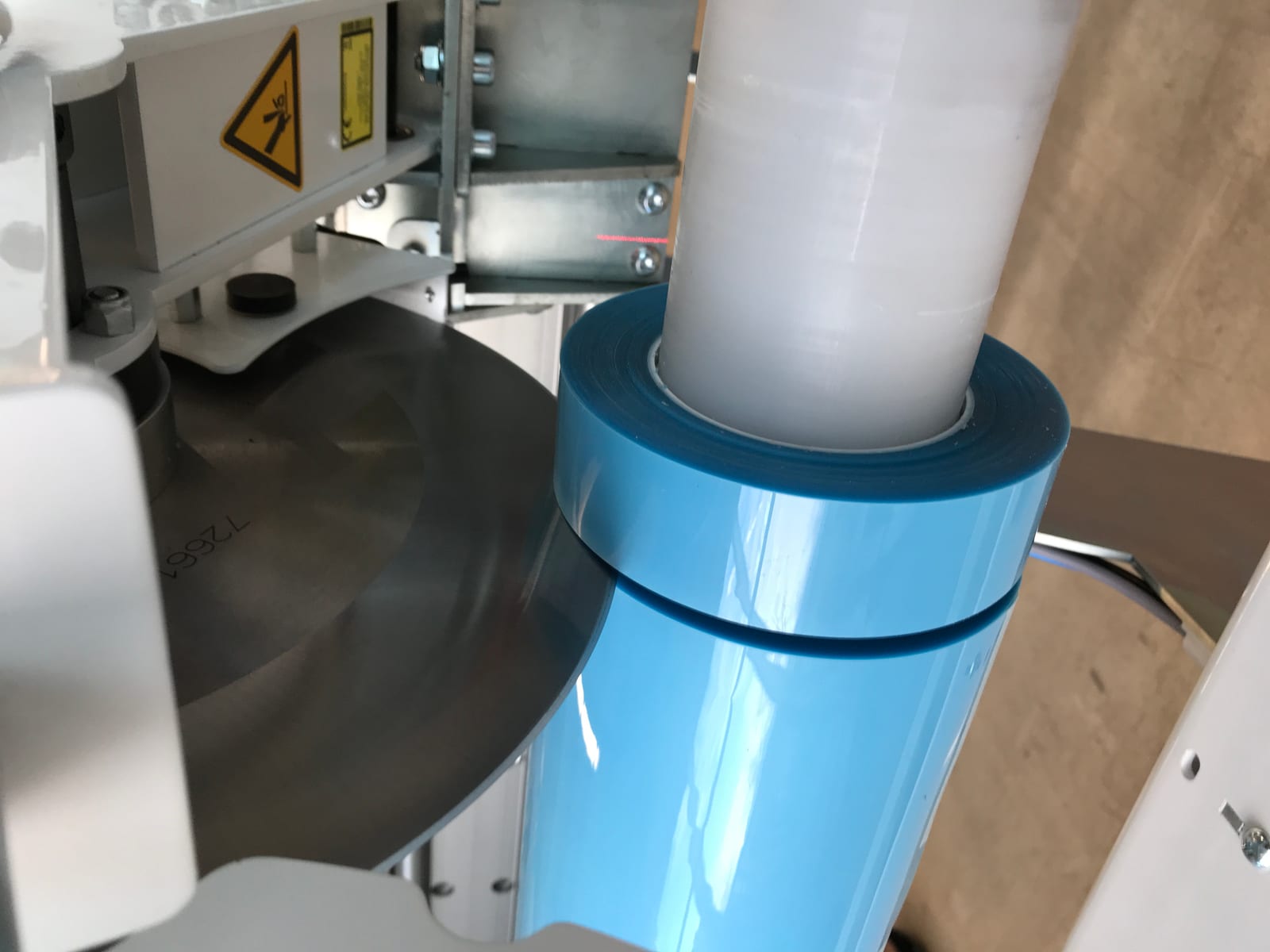
As a general rule, it is advisable to cut with a rotating blade, i.e. one that rotates passively along with the material. This results in less friction and therefore less heat build-up in the material, and the cutting force is distributed evenly around the circumference of the blade. However, there are materials that cannot be cut with a rotating blade, e.g. foam adhesive films. In such cases, the blade can be locked in place on NEPATA slitters. The stationary blade provides greater cutting force within the system. However, this results in significantly more friction. Again, this generates heat, which can cause the adhesive to smear.
Our recommendation: With small diameters, the issue with the stationary blade is not so significant. Large tapes that require a stationary blade should remain the exception with this type of cutting system. Do not carry out too many operations in succession here. From time to time, the blade can be cleaned by cutting through a less demanding vinyl film or an empty cardboard tube. In addition, the blade position should be changed from time to time to ensure that cuts are not always made at the same point.
4. Lubricating the blade: Whenever possible
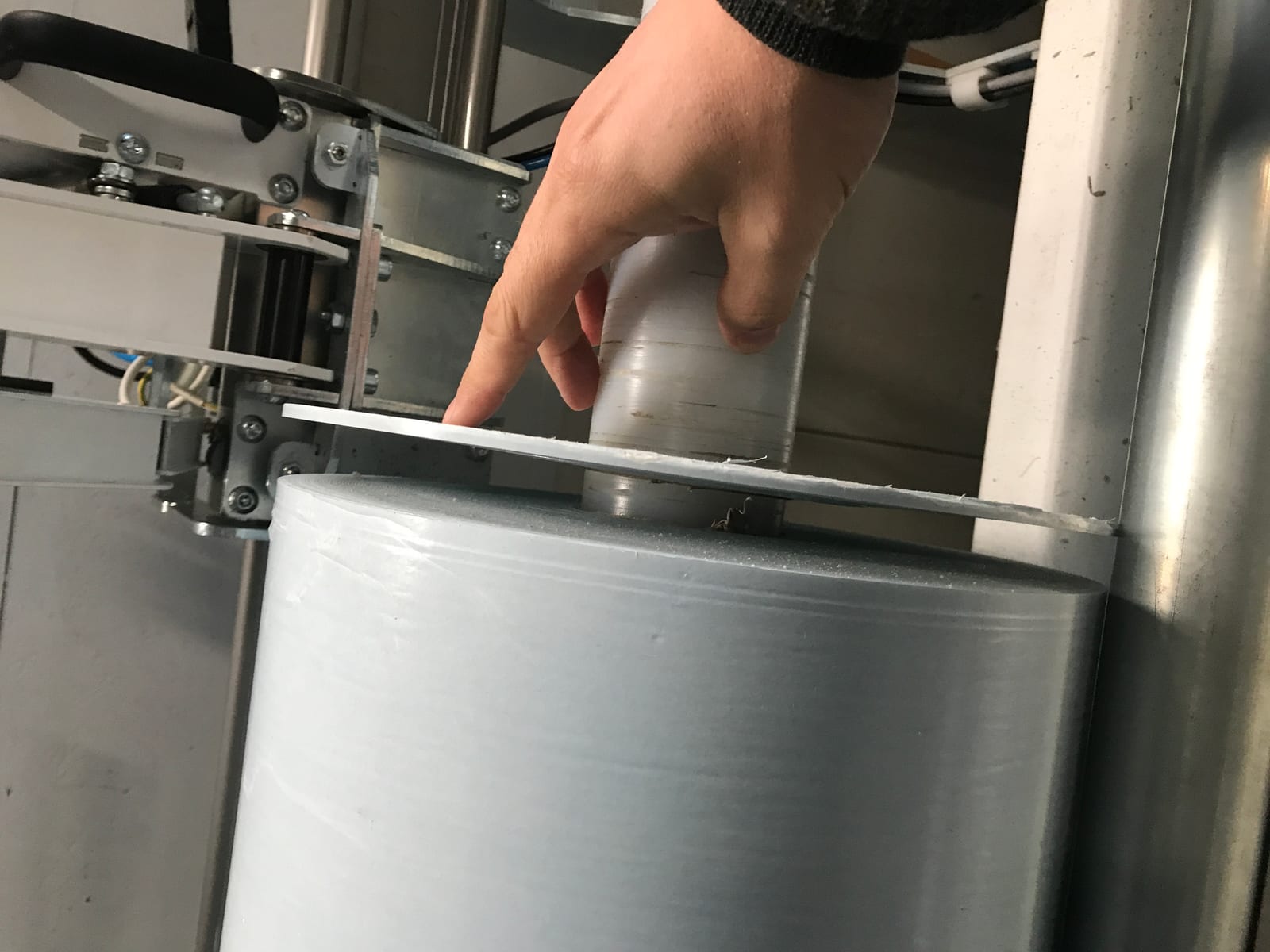
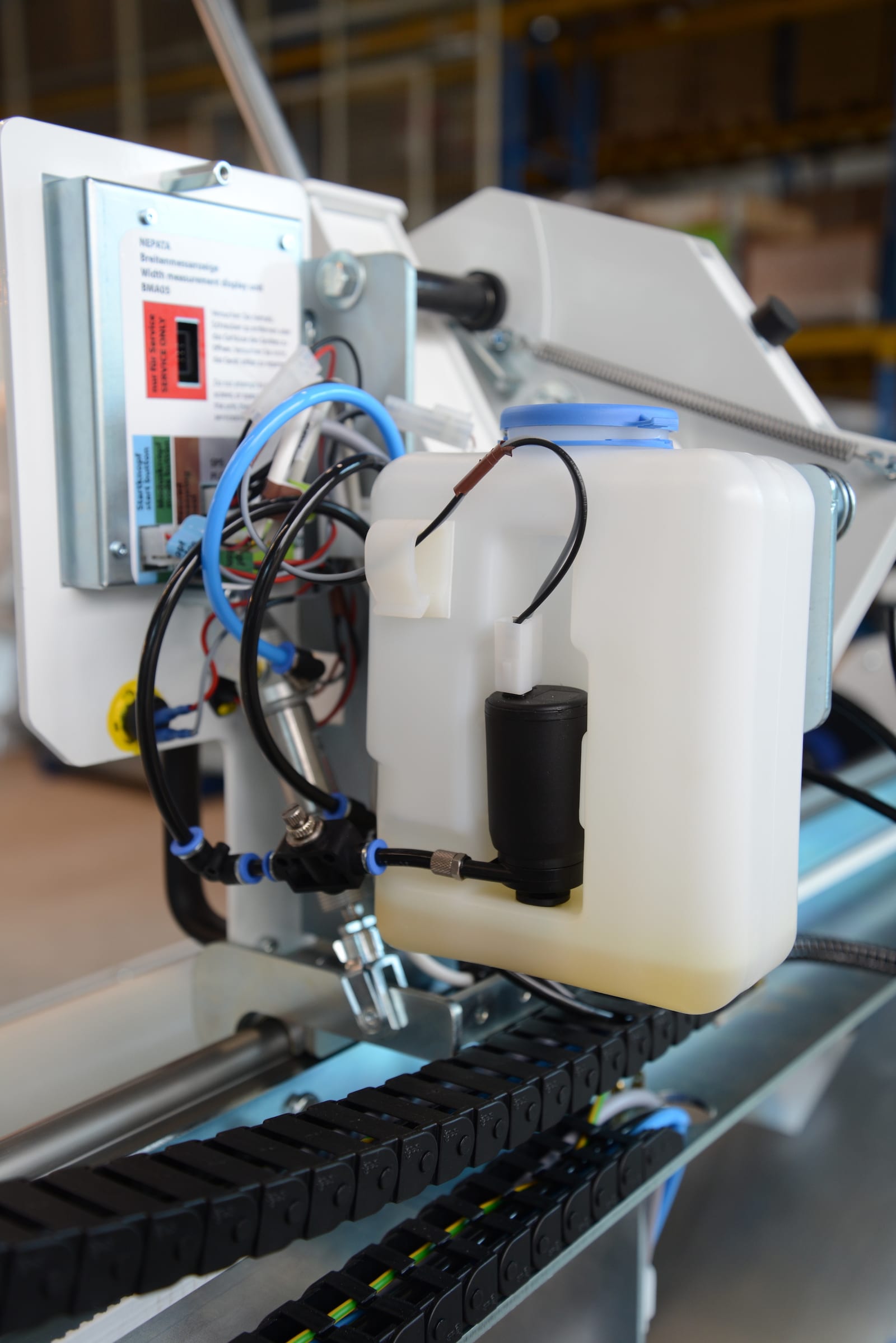
Lubrication is very important when cutting many types of material. It reduces friction and, consequently, heat build-up. Less adhesive residue builds up on the blade. There are not only oil-based lubricants, but also water-based ones. These are a good choice if there is a concern that the silicone could impair the vinyl film’s adhesive strength. With the automatic jaw lubrication system developed by NEPATA (((Link to lubrication system))), only very small amounts of lubricant are required, so we have not yet encountered any negative issues in day-to-day use.
Our recommendation: Use lubricant wherever it won’t cause any harm!
5. Blade temperature: If in doubt, take a break
Every cut raises the temperature of the blade. If a large number of cuts are made in quick succession, the blade can become so hot that the quality of the cut is impaired. Increasing amounts of adhesive may seep out from the cut edges of the vinyl film, eventually causing the individual layers to fuse together.
This happens more quickly with tough materials, particularly when the blade is used in an upright position. In extreme cases, the blade may become warped. However, we are talking here about hundreds of rapid cutting operations, for example, during the production of very narrow strips.
Our recommendation: Allow the blade to rest after several cuts so that it can cool down sufficiently.
6. Ambient temperature: Use plenty of lubricant in hot weather
Most vinyl films become more difficult to slit the higher the ambient temperature or the temperature of the medium is. This is particularly true of self-adhesive films: adhesives change their viscosity when heated and become more slippery. This is especially important to bear in mind in non-air-conditioned rooms during the summer, when temperatures in the hall can reach 35 degrees Celsius.
Our recommendation: Work a little more slowlyat higher ambient temperatures and always lubricate carefully.
7. Winding tension of the medium: It’s better to perform re-rewinding
The winding tension is of the utmost importance. Loosely wound media with loose, slippage-prone windings are generally much more difficult to slit than tightly wound rolls (or linerless media). The loose windings cause a wavy motion between the layers. This displacement inevitably results in fraying. However, please note: windings that are too tight are also problematic, as the roll then becomes too compact to allow the individual layers to be cut through at all.
Our recommendation: If such material is fed into the machine, it is better to re-wind it properly. Rewinding on a NEPATA machine under controlled web tension ensures that the winding tension is perfect for excellent cutting results.
Extra tip: Training and video ‘Slitting like a pro’
Of course, there are other parameters that influence whether the cut edge is clean or whether there are problems with slitting. If you want to turn your staff into true slitting professionals, we ’re happy to offer training on NEPATA slitting machines and converting centres fitted with slitting units . Alternatively, you can watch our video “Slitting like a pro”.
Previous articles in our ‘Slitter’ series: